Welcome to RADcamp 2026 - The Latin America Edition
Wet lab (3RAD protocol) & Bioinformatics (ipyrad)
July 20-27, 2026
Hosted by Tecnológico de Monterrey at:
Core Lab Genomics, Expedition FEMSA, 501
Avenida Eugenio Garza Sada No. 2445,
Colonia Tecnológico,
64700 Monterrey, N.L., México
Map of the area highlighting Expedition FEMSA &
Google maps link
RADCamp Latin America 2026 Exit Survey
Please spend some time filling the RADCamp Exit Survey This will help us in reporting to funders and also in improving future RADCamp initiatives.
Summary
This workshop is designed to guide participants through a full RADseq pilot study. Although it will take place over eight days, it is structured into two parts.
Part I of the workshop is an interactive 3-day wet-lab workshop where attendees will be guided through a RADseq DNA library preparation (3RAD). Participants will have the option of using ~24 of their own extracted DNA samples that can be used in the workshop to develop pilot data for their research. In addition to demonstrating and generating 3RAD libraries, we will introduce RADseq methods, explain common pitfalls and focus on ways to increase data quality and reduce missing data while reducing costs compared to other protocols. On the fourth and fifth day the libraries will be pooled and sequenced in-house for paired-end Illumina sequencing. The best part is that the sequencing cost will be completely subsidized (free!), and you get to see how the instruments are used.
In Part II of this workshop (days 6-8), we will introduce RADseq assembly, phylogenetic and population genetic methods, high-performance computing, basic unix command line and Python programming, and jupyter notebooks to promote reproducible science. We will introduce ipyrad, a unified and self-contained RAD-seq assembly and analysis framework, which emphasizes simplicity, performance, and reproducibility. We will proceed through all the steps necessary to assemble the RAD-seq data generated in Part I of the workshop. We will introduce both the command line interface, as this is typically used in high-performance computing settings, and the ipython/jupyter notebook API, which allows researchers to generate documented and easily reproducible workflows. Additionally, we will mentor participants in using the ipyrad.analysis API which provides a powerful, simple, and reproducible interface to several widely used methods for inferring phylogenetic relationships, population structure, and admixture. Participants are invited to give a short research talk on the last day of this session to showcase their project and data.
This workshop is intended as a bootcamp for early career students, post-docs, or faculty to learn best practices that they can then help to disseminate to the broader community. The opportunity to learn while generating and analyzing real data is a bonus that we hope will accelerate the learning process, particularly for early-stage graduate students who can use the pilot data for their thesis research. This workshop is geared toward practicing field biologists without RADseq data for their system and with little or no computational experience. We encourage all scientists to submit an application. We especially welcome women and under-represented minorities and early-stage students, or early-career faculty with the potential to pass on skills to large groups.
This was made possible through generous funding from the American Genetics Association, The International Biogeography Society, The Society for the Study of Evolution International Event Grants, the International Society for Computational Biology and its award for Advancing Bioinformatics, The British Ecological Society, American Society of Naturalists, and the CoreLab Genomics from Tecnólogico de Monterrey.
Organizers, Instructors, and Facilitators
- Natalia Bayona Vásquez (Oxford College Emory University)
- Isaac Overcast (Columbia University)
- Erika Magallón-Gayón (Tecnólogico de Monterrey)
- Deren Eaton (Columbia University)
- Sandra Hoffberg
- Todd Pierson (Kennesaw State University)
- Silvia A. Hinojosa Alvarez (Tecnólogico de Monterrey)
- Jesús Hernandez Perez (Tecnólogico de Monterrey)
- Andrea Felix Ceniceros (Tecnólogico de Monterrey)
- Rocio Alejandra Chavez-Santoscoy (Tecnólogico de Monterrey)
Please contact us at radcamp.nyc+LatinAmerica@gmail.com with any questions.
Wet Lab (3RAD) Schedule
| Times | Day 1 (Mon) | Day 2 (Tue) | Day 3 (Wed) |
|---|---|---|---|
| 8:30-9:00 | Check-in and refreshments | Check-in and refreshments | Check-in and refreshments |
| 9:00-12:30 | Introduction slides & Lecture | Library amplification | Lecture on Sequencing |
| 12:30-13:45 | Lunch | Lunch | Lunch |
| 13:45-18:00 | Digestion, Ligation, Clean up | Clean up and Gel | Another round of clean up and Gel |
| 18:00-20:00 | Casual evening | Size-selection & Quantification | Networking dinner |
3RAD resources
- Inner barcode sequences in ipyrad format
- Adapter Info for ordering
- How to resuspend adapters
- How to resuspend i5 and i7 primers
- Index diversity calculator
- Homemade speedbeads
Additionally these files may be found in the RADCamp Part I Google Drive:
- i7 and inner barcodes used during workshop
- Find the i5/i7 index sequence from the name
- BadDNA order form with index sequences
- Full 3RAD protocol for plates
- Library pooling guide
Sequencing Schedule
| Times | Day 4 (Thu) | Day 5 (Fri) |
|---|---|---|
| 8:30-9:00 | Final gel & Pooling | Free Day |
| 9:00-12:30 | Coffee & HPC Setup and iPyrad Assembly Tutorial | Free Day |
| 12:30-13:45 | Lunch | Free Lunch |
| 13:45-18:00 | Set up sequencing run & ipyrad assembly preparation | Free Day |
| 18:00-20:00 | Dinner on own | Free Dinner |
Sequencing Resources
TBD
Bioinformatics (ipyrad) Schedule
| Times | Day 6 (Sat) | Day 7 (Sun) | Day 8 (Mon) |
|---|---|---|---|
| 8:30-9:00 | Check-in and refreshments | Check-in and refreshments | Check-in and refreshments |
| 9:00-12:30 | Demux/QC Empirical Data (start API tools if empirical data isn’t ready) | Review Assembly results & ipyrad API and analysis tools | Symposium |
| 12:30-13:45 | Lunch | Lunch | Lunch |
| 13:45-18:00 | Begin Empirical Assembly | Empirical analysis w/ API tools | Q&As Genomics Core-Instructors Participants |
| 18:00-20:00 | Optional bowling activity; Casual discussion topics: science, genomics, bioinformatics, jobs in research, jobs in teaching, etc. | Dinner on own | Farewell Dinner (optional) |
RADCamp Latin America 2026 co-sponsored by:

Core Lab: Genomics, Tecnológico de Monterrey |

Expedition FEMSA |
American Genetics Association through the Special Event Awards program |
International Society for Computational Biology |

The International Biogeography Society |

Society of the Study of Evolution |
The American Society of Naturalists |
The Eaton Lab |

The British Ecological Society (Award #EF26/1051) |
... And viewers like you. |
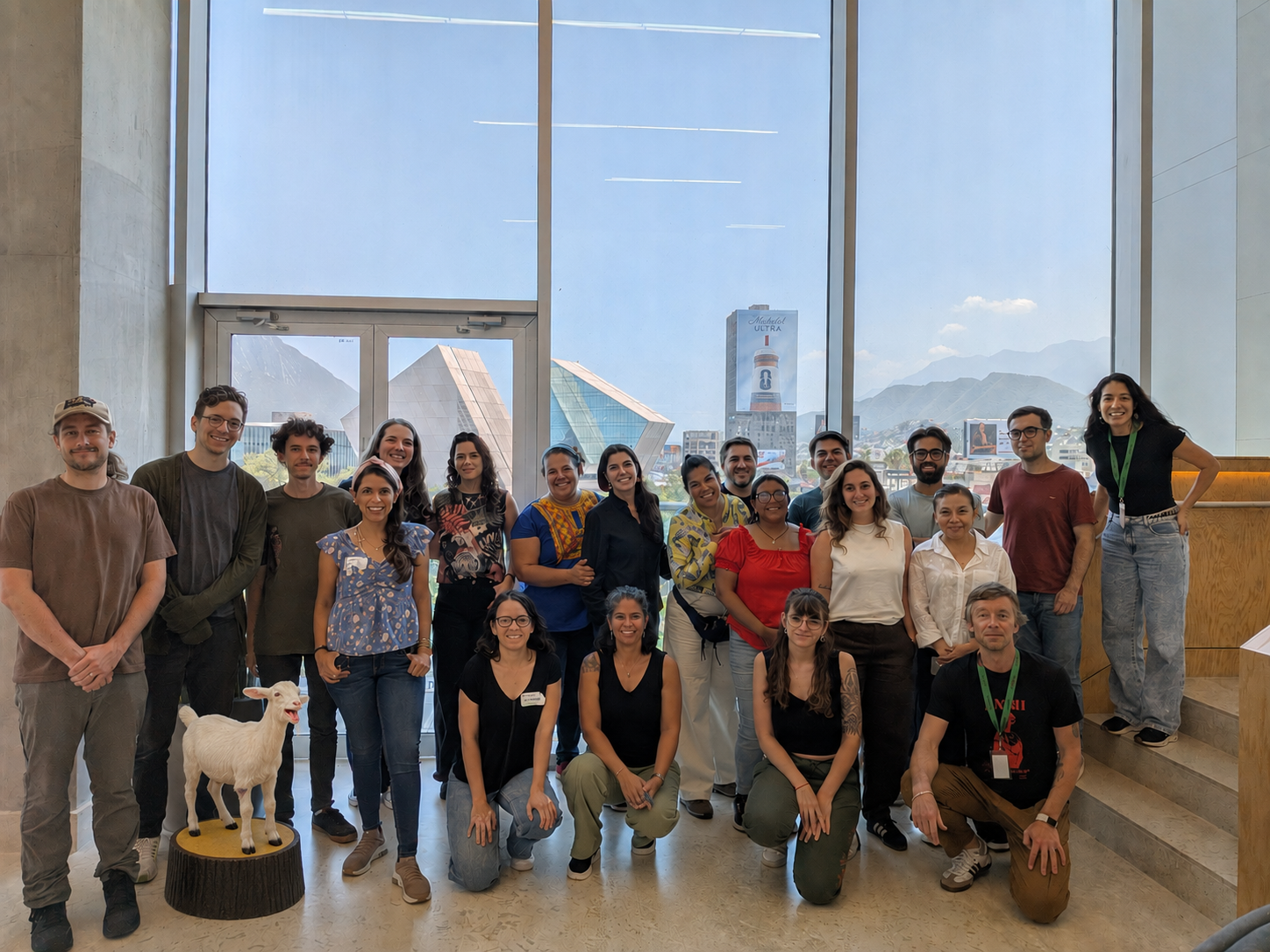
RADCamp Latin America 2026 Group Photos
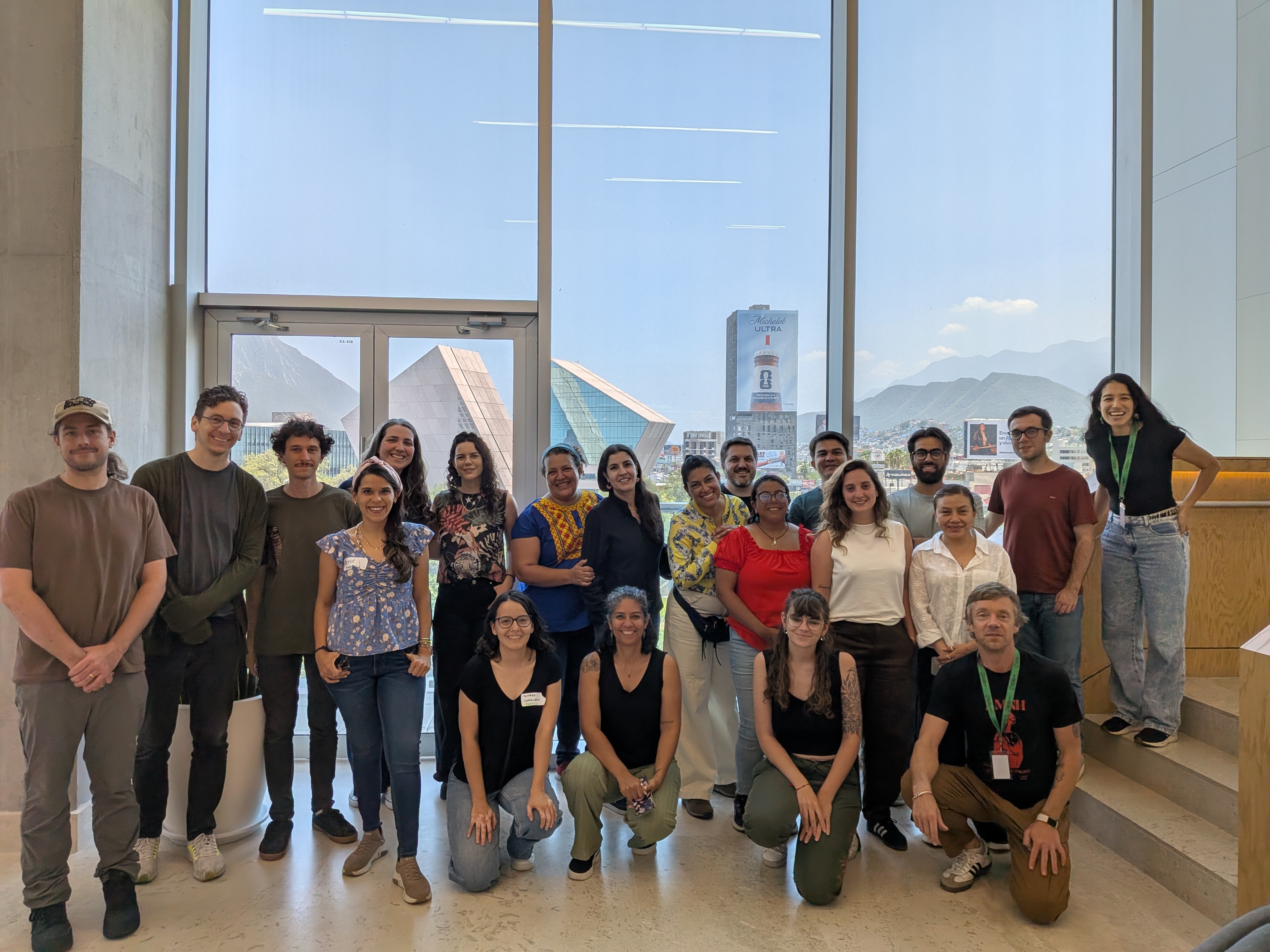
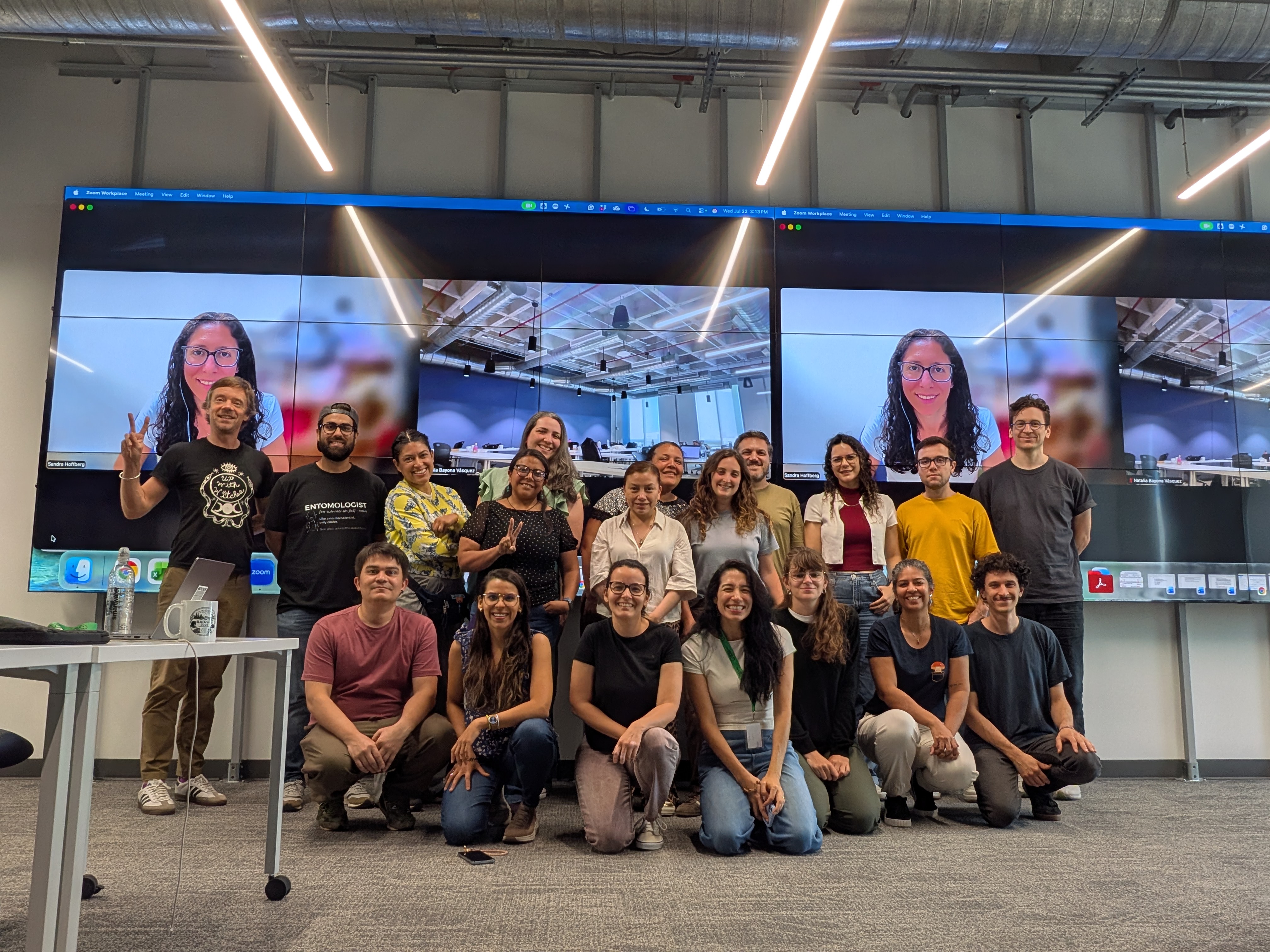
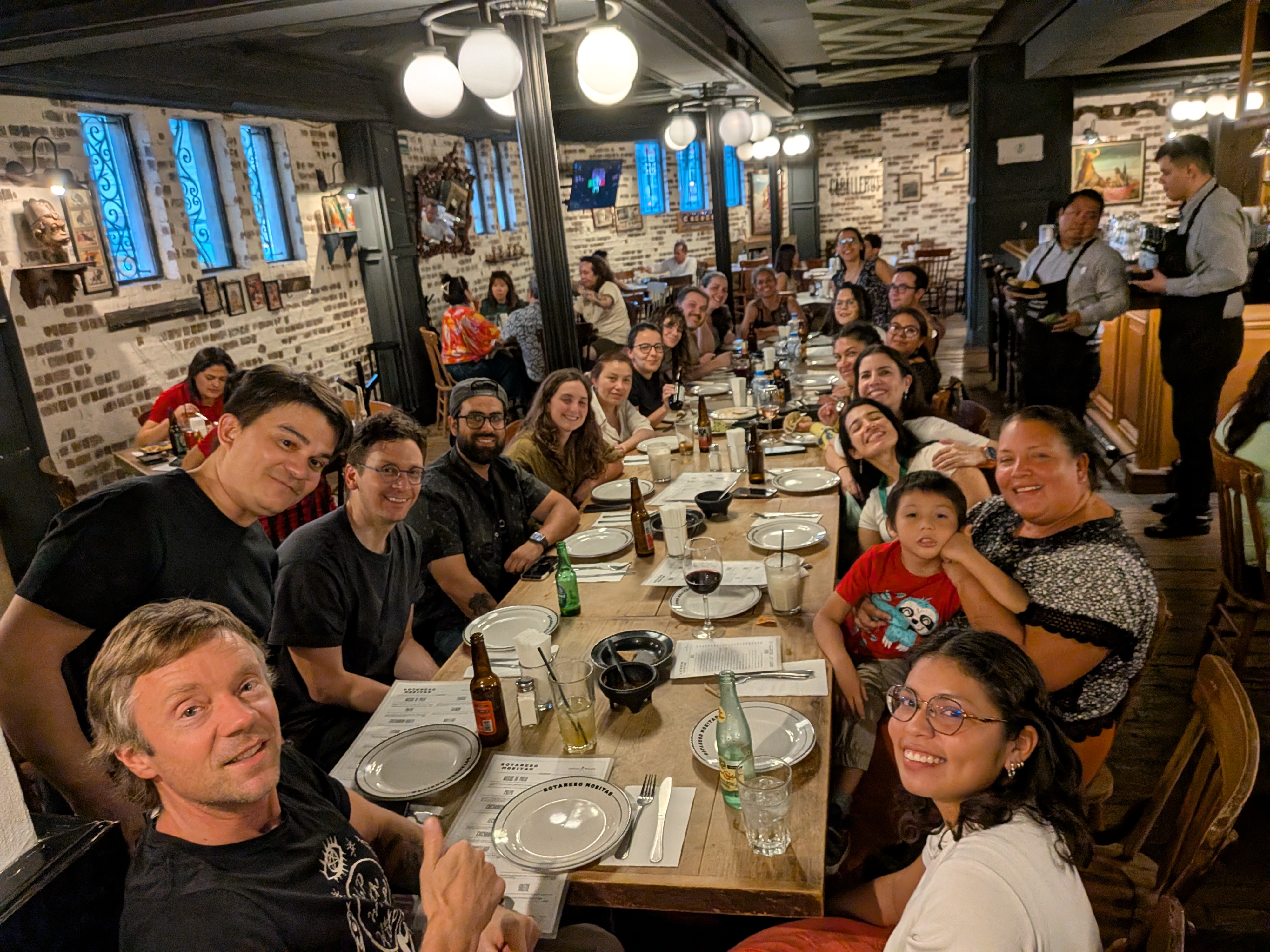
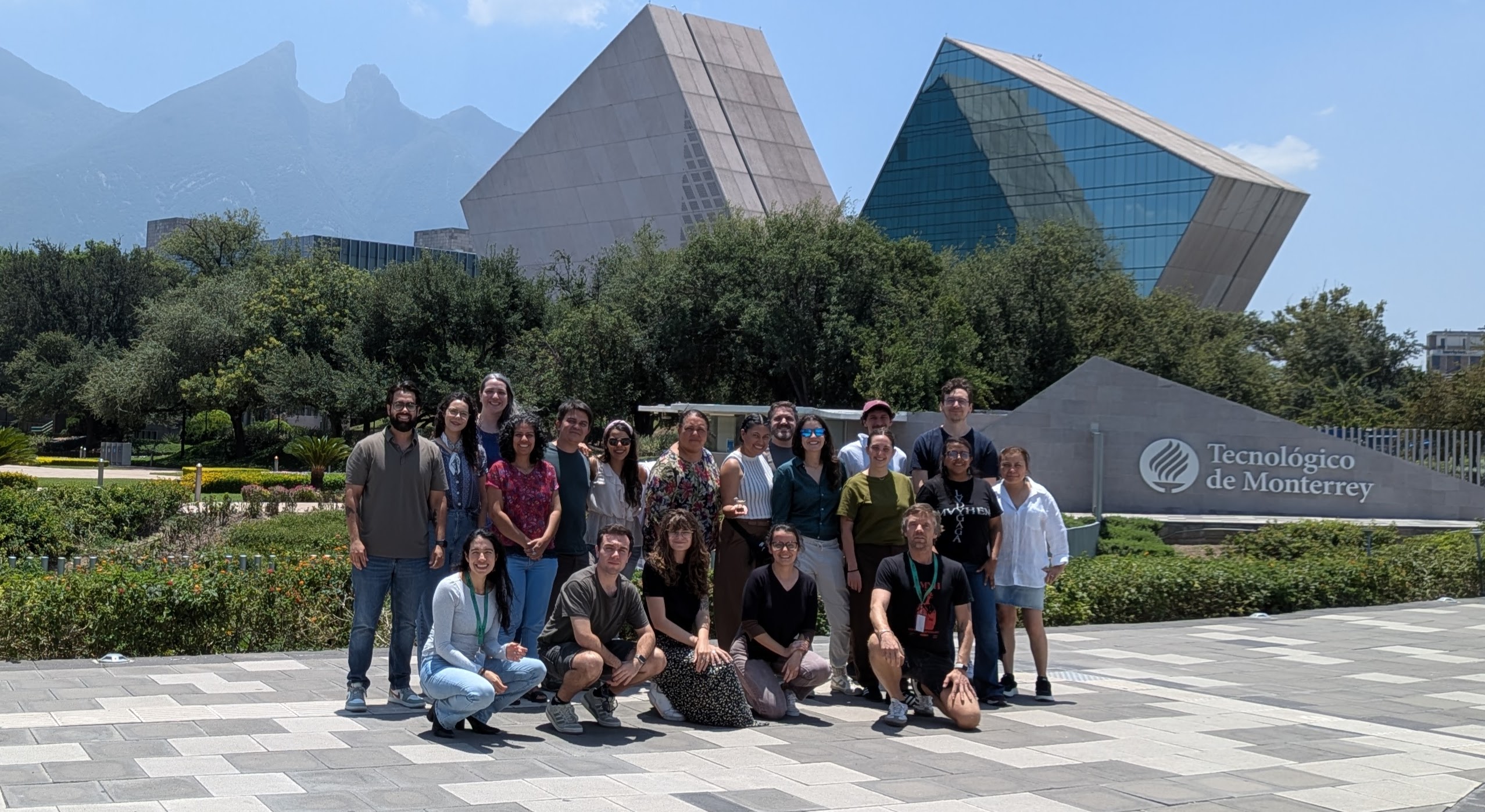
(The Secret ‘After Lab Work’ Photo is here, or ‘What the goat did to us’)
Acknowledgements
RADCamp Latin America would not have been possible without important contributions to the workshop in providing us with facilities (classrooms), technological infrastructure (servers), and in general supportive camaraderie necessary to make such a huge undertaking a success. A huge thank you to everyone who helped make RADCamp possible!
We are especially grateful to the Data Science Hub team — Juan Arturo Nolazco Flores, Enrique Pablos Gutiérrez, and, in loving memory, Hugo Miguel González Hernández — for providing the servers that made our data analysis possible; and to Manuel Francisco Daniel Flores and Luis Fernando Santiesteban Moreno for all their help with network access and connectivity.
Our sincere thanks also go to the Behavioral Research Lab and Public Opinion Lab team — Pedro Manuel Cortés Esparza, Aída González Escalante, Norberto Naal Ruiz, and Rachel Rodríguez Delgado — for providing us with access to the LADS, which offered a fantastic space for some incredibly productive bioinformatics sessions.
We thank Yasmin Yabyabin and Mark Medd at Columbia University for critical administrative support, and Edgar Vázquez Salazar of Abalat sa de CV for prodigous patience.
And a very special thank you to Ana Laura Lara Rivera for lending us equipment and helping make all the wet lab work possible.
Thank you all for contributing your time, resources, and support. You were an important part of making RADCamp a success!
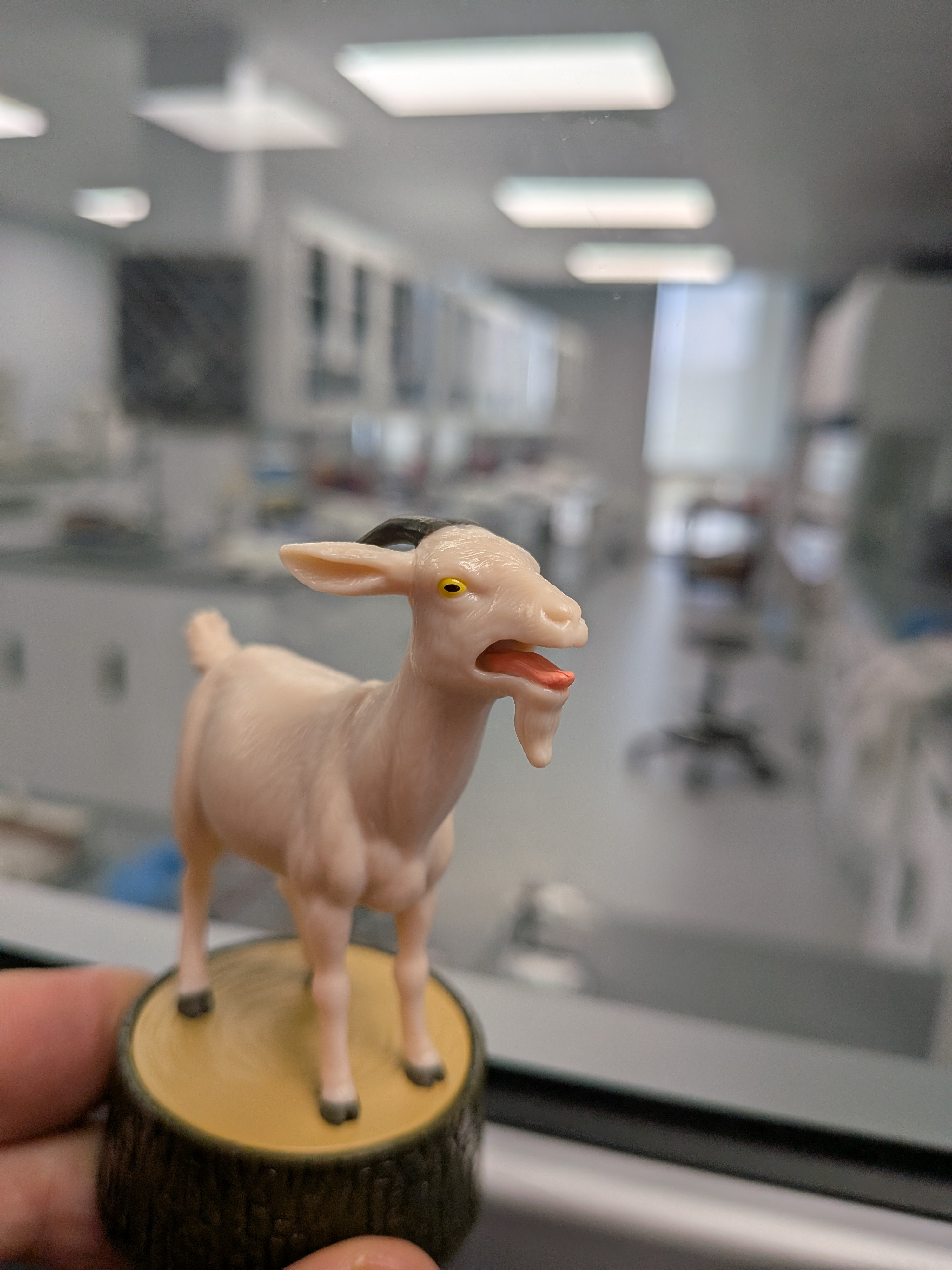
Special thanks to the unofficial RADCamp Latin America Mascot: The Screaming Goat!
RADcamp Part I tutorial contributors: Sandra Hoffberg, Natalia Bayona Vasquez, and Travis Glenn. Many things we reference can be found on badDNA.uga.edu
RADCamp Part II tutorial contributors (over the years): Isaac Overcast, Deren Eaton, Sandra Hoffberg, Natalia Bayona-Vasquez, Mariana Vasconcellos, Laura Bertola, Josiah Kuja, Anhubab Kahn, Arianna Kuhn.